Building Software with AI: Understanding the Tradeoffs Before You Start

Introduction
The question is no longer whether AI can build software. It can.
Today, founders, operators, marketers, analysts, and subject matter experts can create applications that would have required engineering teams just a few years ago. In many cases, these tools are not prototypes. They are running in production and delivering real business value.
This shift is exciting because it lowers the barrier to solving problems. More ideas can be tested, more processes can be automated, and more teams can create solutions without waiting months for development resources.
At the same time, not every project carries the same level of complexity, risk, or long term responsibility. Before starting a new software project with AI, it is worth understanding the tradeoffs involved.
AI Has Changed Who Can Build Software
Historically, building software required technical expertise, significant budgets, and dedicated engineering resources. Today, the equation looks very different.
A sales manager can create an internal dashboard. An operations team can automate approval workflows. A financial analyst can build reporting tools. A founder can launch a customer portal.
The ability to translate business knowledge directly into working software is one of the most important changes AI has introduced. For many organizations, this creates opportunities that simply did not exist before.
Production Ready Does Not Mean Enterprise Ready
One of the biggest misconceptions in the current market is that software falls into only two categories: prototype or enterprise software. Reality is much more nuanced.
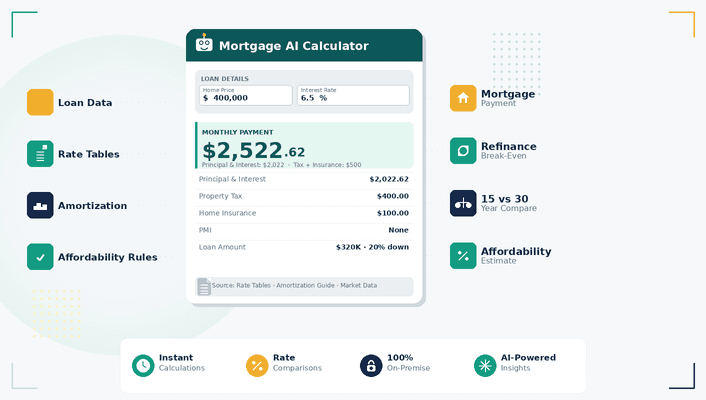
Many AI generated applications can absolutely be production ready. Examples include internal operational tools, team productivity applications, approval workflows, reporting dashboards, knowledge management systems, content management tools, and department specific portals.
These systems often have well defined requirements, limited user groups, and manageable risk profiles. The fact that they were built with AI does not make them less valuable.
In many cases, AI enables organizations to solve problems that would never have justified a traditional development project.
The Real Question Is Complexity
Rather than asking whether AI can build something, it is often more useful to ask how much complexity the system must handle. As complexity grows, the importance of architecture and engineering discipline grows with it.
A better way to think about complexity is to compare the type of system being built.
Lower complexity tools usually include internal dashboards, simple approval workflows, reporting portals, knowledge bases, and department specific productivity tools. These systems often have limited users, clearer requirements, and manageable operational risk.
Higher complexity systems usually include multi tenant SaaS platforms, loan origination systems, financial transaction platforms, compliance management systems, and enterprise CRMs. These systems typically require stronger architecture, security, integrations, testing, governance, and long term maintenance.
Both categories can benefit from AI assisted development. The difference is not whether AI is used. The difference is how much complexity the system must manage over time.
Five Questions to Ask Before You Start
Before beginning a project, it is worth evaluating a few key factors.
How critical is the system?
If the application becomes unavailable for a few hours, what happens? The answer often determines how much engineering rigor is required.
How sensitive is the data?
Applications handling customer, financial, legal, or regulated information typically require stronger security and governance.
How quickly will requirements evolve?
Many systems start simple and become increasingly complex as the business grows. Future changes should be part of the evaluation.
Who will maintain the system?
Building software is only the beginning. Someone must understand, improve, and support it over time.
How long do you expect the solution to live?
A six month operational tool should be approached differently than a platform expected to support the business for years.
AI Changes the Economics of Software
Perhaps the most significant impact of AI is not technical. It is economic.
Projects that were previously too small, too expensive, or too difficult to justify can now become viable. Organizations can solve more problems because the cost of experimentation has dropped dramatically.
Teams can focus less on whether they can afford to build something and more on whether building it creates value.
The Role of Engineering Is Evolving
AI has made implementation faster. That does not eliminate the need for engineering. Instead, it shifts where engineering creates value.
Architecture, security, reliability, scalability, governance, and maintainability become increasingly important as applications grow in complexity. As software becomes easier to create, thoughtful technical decisions become even more valuable.
Final Thought
AI has expanded who can participate in software creation. That is a positive development for businesses of all sizes.
The most successful projects will not be defined by whether they were built with AI or by traditional engineering methods. They will be defined by whether the chosen approach matched the complexity, risk, and goals of the problem being solved.
The question is not whether AI can build it. The question is whether the solution is appropriate for the business you are building.